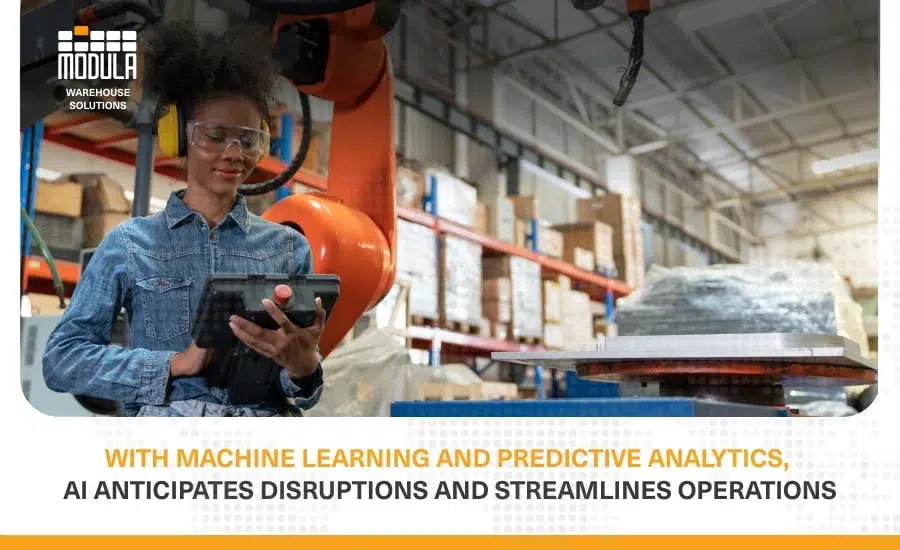
AI in Supply Chain: Key Points
- AI improves supply chain efficiency by anticipating disruptions and automating decisions using machine learning and predictive analytics
- It accurately forecasts demand and production needs, optimising inventory and resource planning
- Leading AI trends in logistics include predictive analytics, intelligent robots, and computer vision
As of 2023, the market for AI in warehousing, including robotics, smart inventory systems, and AI-driven logistics, reached $8.3 billion. In 2025, it’s projected to grow to $12.97 billion.
For warehouse managers, this signals a clear shift: these technologies are no longer optional; they’re becoming the industry standard.
In this guide, we will:
- Explore how AI is applied in supply chain and logistics operations
- Identify key challenges in implementing AI across the supply chain
- Highlight seven AI trends transforming supply chain and logistics, including Modula APAC’s warehouse management system
Understanding AI in Supply Chain and Logistics
Artificial intelligence (AI) is redefining the supply chain and logistics industries through scalable, data-driven automation and optimisation.
In logistics, AI improves route planning, inventory tracking, demand forecasting, and warehouse automation, further reducing costs and delivery times.
Other technologies such as machine learning, computer vision, and autonomous systems power faster, more accurate decisions across operations.
By analysing large datasets instantaneously, AI helps businesses respond to disruptions, streamline workflows, and improve overall resilience and efficiency.
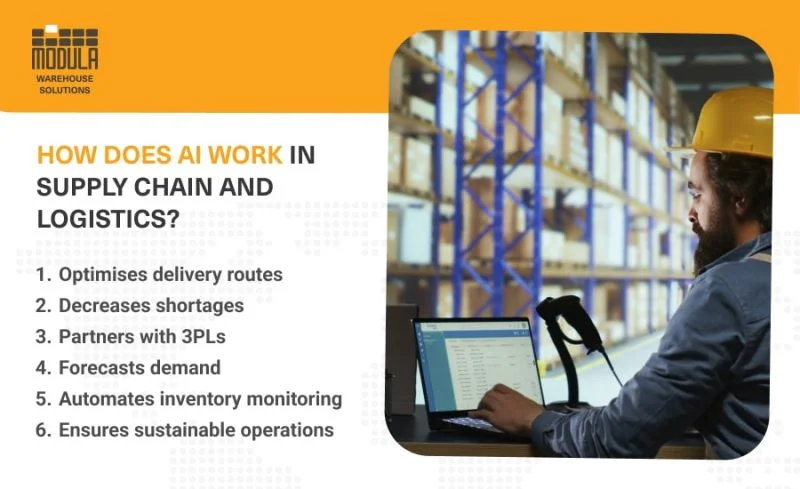
How Does AI Work in Supply Chain and Logistics?
AI supports supply chain operations by using machine learning, natural language processing, and predictive analytics to spot patterns, predict disruptions, and boost efficiency.
- Optimise delivery routes and fleet performance: Manufacturers using AI-powered route planning tools, such as Google OR-Tools, can reduce delivery times, fuel costs, and carbon emissions by adjusting routes based on traffic, weather, and delivery priority.
- Streamline procurement and reduce shortages: AI systems use machine learning to evaluate supplier performance, lead times, and external risks, such as geopolitical events or raw material shortages, to prevent production delays and ensure timely procurement.
- Coordinate with third-party logistics partners (3PLs): In complex supply chains such as automotive or electronics, AI helps track shipments across multiple logistics partners. Companies can leverage predictive analytics to flag potential delays or capacity issues before they escalate.
- Accurately forecast demand and production capacity: According to McKinsey, AI can cut forecasting errors by up to 50% through sales history, market trends, and seasonality assessments to help manufacturers align production, reduce waste, and meet demand more efficiently.
- Leveraging IoT for real-time visibility: AI platforms integrated with IoT sensors, such as those measuring temperature, humidity, and GPS location, deliver instant updates on goods in transit. For example, pharmaceutical companies use AI to keep vaccines within safe temperature ranges in transit.
- Automate inventory tracking and compliance: AI systems can auto-generate documentation for customs, proof of delivery, and chain-of-custody logs, decreasing human error and accelerating cross-border logistics for global manufacturers.
- Ensure ethical and sustainable operations: AI enhances traceability from raw materials to delivery, helping companies meet environmental, social, and governance (ESG) requirements by verifying supplier compliance with ethical and environmental practices.
7 AI Trends Shaping Supply Chain and Logistics
From forecasting demand to streamlining delivery routes, AI is driving innovation, efficiency, and resilience across global logistics networks.
Below are the key trends shaping this transformation:
1. Predictive Analytics
AI-powered predictive analytics enable companies to forecast demand with greater accuracy by analysing historical sales, market trends, weather patterns, and socio-economic data.
Walmart, for instance, uses an AI-powered inventory management system that combines historical data with predictive analytics to strategically position holiday items across distribution centers, fulfilment hubs, and stores.
2. Intelligent Robots
Facilities are increasingly deploying AI-enabled robots for tasks like picking, packing, and sorting.
Companies are also using autonomous mobile robots (AMRs), automated guided vehicles (AGVs), and drones for internal transport and inventory monitoring.
3. AI-Enhanced Route Optimisation
AI-powered route planning systems assess live traffic, weather conditions, and delivery constraints to chart the most efficient paths.
A case in point is UPS’ Orion platform, which leverages AI to reduce mileage by 100 million miles and save 10 million gallons of fuel each year.
4. Supply Chain Risk Prediction
AI can help monitor supplier performance, news feeds, geopolitical data, and logistics bottlenecks to flag potential disruptions before they occur.
5. Chatbots and Virtual Assistants
AI-driven chatbots are transforming customer service in logistics by managing high-volume tasks such as shipment tracking, delivery notifications, address updates, and exception handling.
Beyond answering FAQs, these intelligent assistants learn from past interactions to provide personalised and context-aware support.
6. Computer Vision
AI-enabled vision systems check for product damage, verify labels, and monitor compliance during transit and handling.
Amazon uses this technology to flag damaged packages before they leave the facility, minimising costly returns and improving customer experience.
7. Sustainable Logistics
AI supports sustainable logistics by optimising delivery loads, diminishing fuel usage, and cutting emissions through smarter routing.
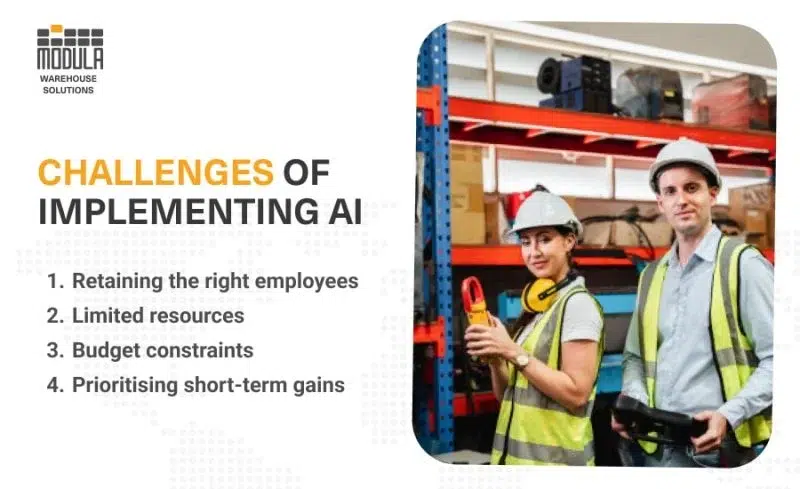
Top Challenges of Implementing AI in Supply Chain and Logistics
Adopting AI into supply chain and logistics comes with challenges, including:
1. Securing and Retaining the Right Talent
A major barrier to AI adoption in supply chain management is finding talent that bridges technical and operational expertise.
Hiring data scientists isn’t enough, as you need a team that can apply AI to real-world supply chain challenges like demand shifts, supplier risk, and logistics efficiency.
To stand out, companies need to provide a clear path for AI professionals to drive innovation and deliver operational value.
2. Limited IT Resources and Budget Constraints
High upfront costs for infrastructure, software, and skilled talent, combined with ongoing expenses for cloud services and system updates, can overwhelm starting or mid-sized operations.
To offset these challenges, companies can adopt cloud-based platforms, use open-source tools, and focus on high-impact applications like demand forecasting to maximise ROI with minimal upfront investment.
3. Overemphasising Short-Term Gains
Focusing only on quick wins, like cost cuts or faster deliveries, can limit AI’s long-term value in the supply chain.
Without a strategic roadmap, AI efforts often remain underutilised.
A long-term approach ensures AI supports broader goals like network resilience, supplier risk mitigation, and sustainability.
This enables systems to scale, adapt, and drive lasting impact.
Integrate Modula APAC Solutions in Your Supply Chain and Logistics
More and more companies are turning to AI to streamline their operations and stay competitive. Finding the right tools and solutions is key to making this transformation work in the long run.
At Modula APAC, we deliver AI-powered warehouse and inventory solutions that streamline storage, enhance accuracy, and boost operational performance.
Seamlessly integrated with your existing systems, our technology provides real-time visibility, automation, and scalability.
1. Integrated Warehouse Management System (WMS)
Modula’s warehouse management system (WMS) serves as the brain of the warehouse, managing access, picking, location tracking, and stock movement.
It provides real-time visibility into inventory, operator activity, and storage utilisation, helping reduce waste and support smarter decision-making.
2. Seamless ERP and DMS Integration
Modula’s software integrates effortlessly with ERP and DMS platforms, keeping operations synchronised across systems.
This ensures accurate tracking, streamlined workflows, and faster response times throughout the supply chain.
3. Enhanced Inventory Management and Traceability
Modula’s WMS offers employees immediate control over stock levels and product locations, reducing overstock and stockouts.
It also enables full traceability by capturing key data like expiration dates and serial numbers, essential for compliance and quality assurance.


